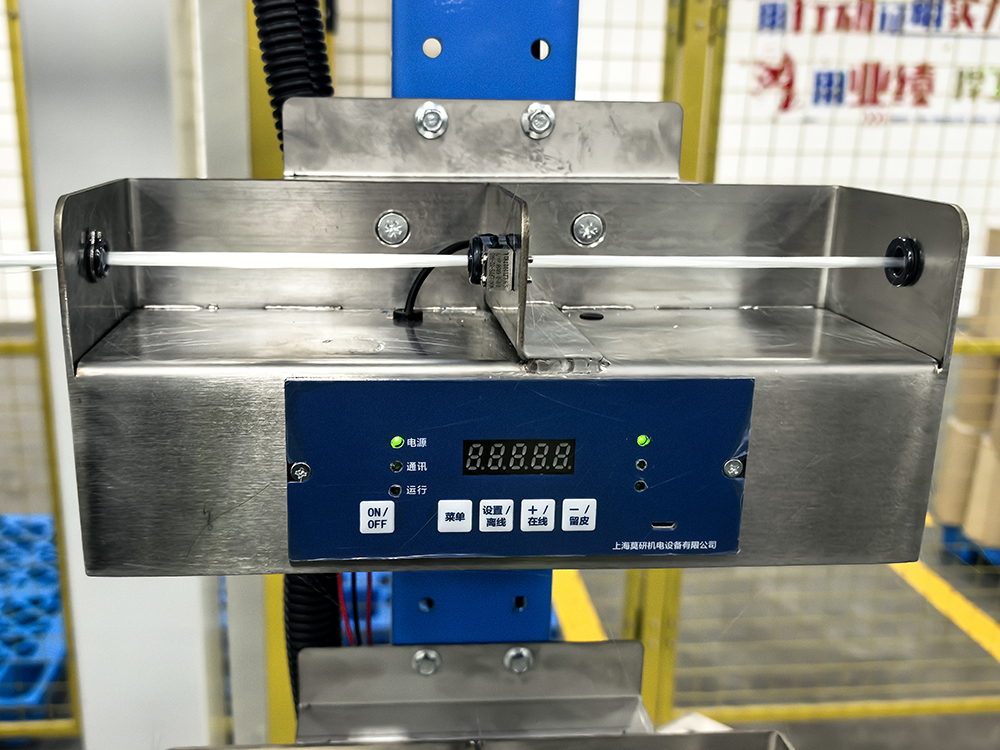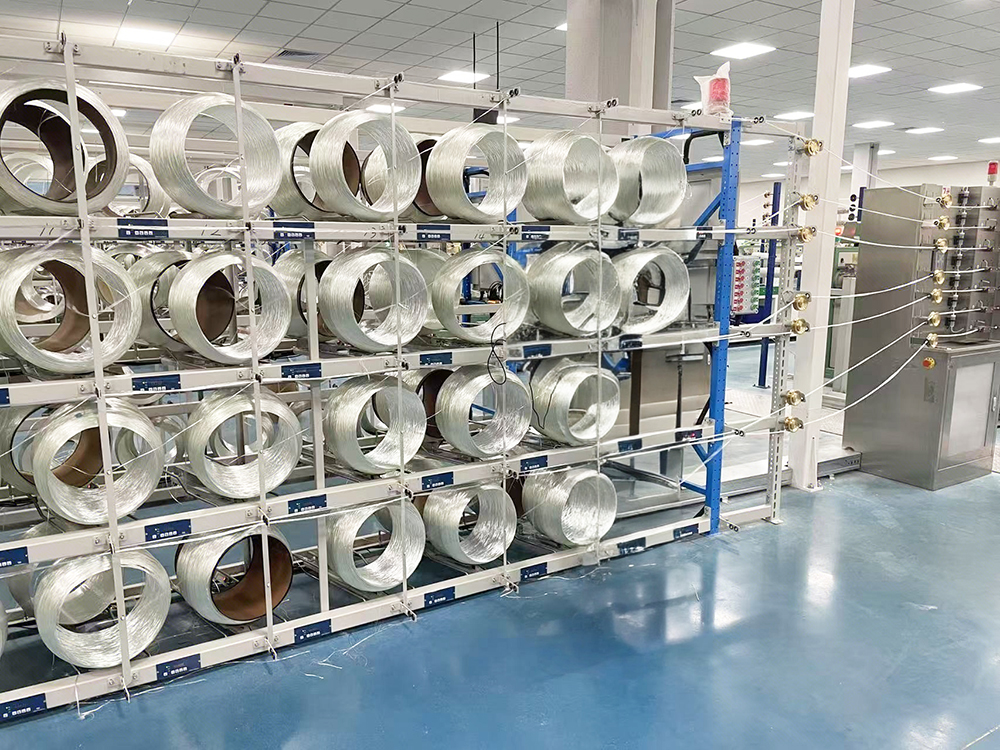

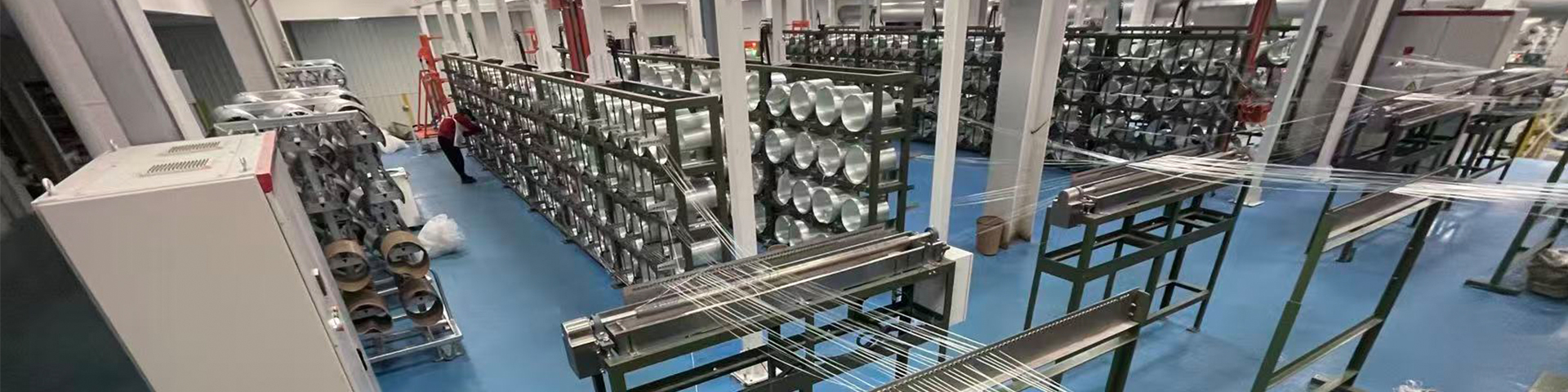
As a high-performance inorganic non-metallic material, glass fiber is widely used in wind power, construction, automotive, electronics and electrical fields due to its advantages of high temperature resistance, corrosion resistance, high strength and excellent electrical insulation. Yarn forming is the core process in glass fiber production. From filament drawing, bundling and sizing to drying and winding, defects such as broken filaments, fuzz and uneven diameter in any procedure will directly affect the mechanical properties and quality stability of the final product. Traditional manual inspection features low efficiency and high missed detection rate, and cannot meet the real-time monitoring requirements of high-speed production lines. Therefore, intelligent visual inspection has become a key technology for industrial upgrading.
Broken filaments, jumping filaments and loose strands
Out-of-tolerance yarn diameter (over-thick / over-thin)
Surface fuzz and impurity adhesion
Yarn offset and misalignment on the godet rollers
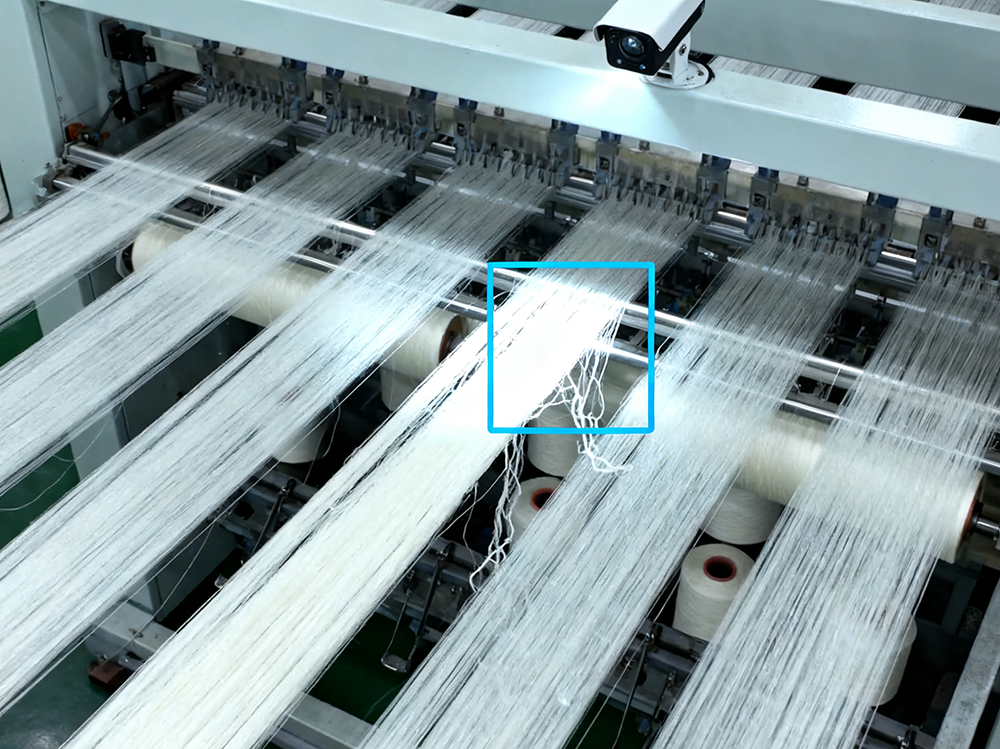
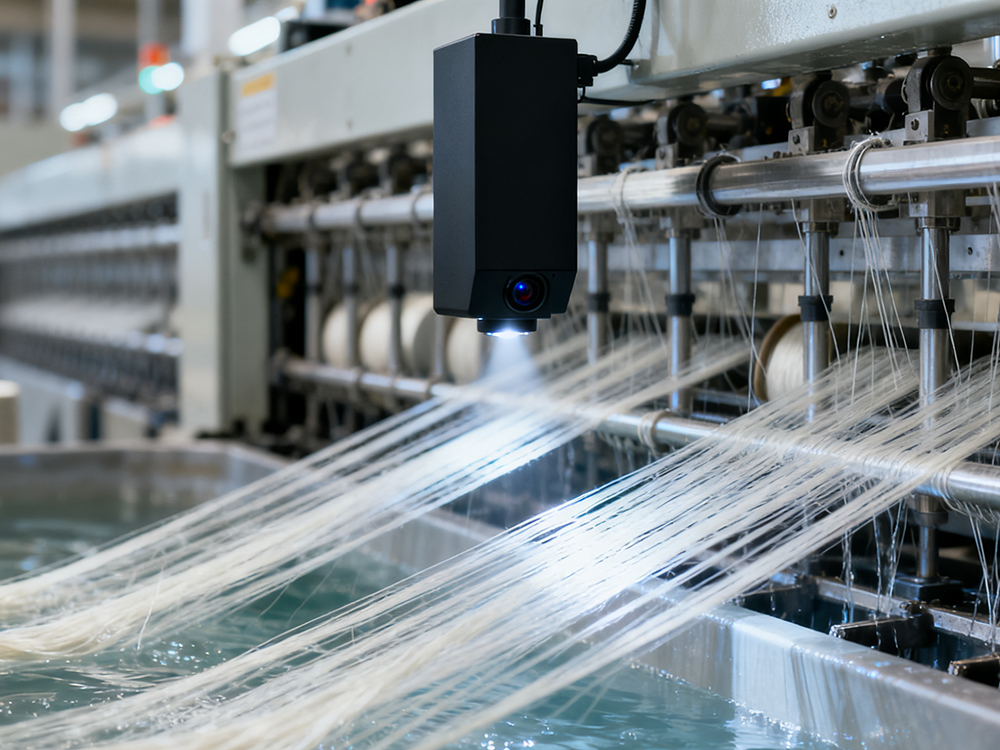
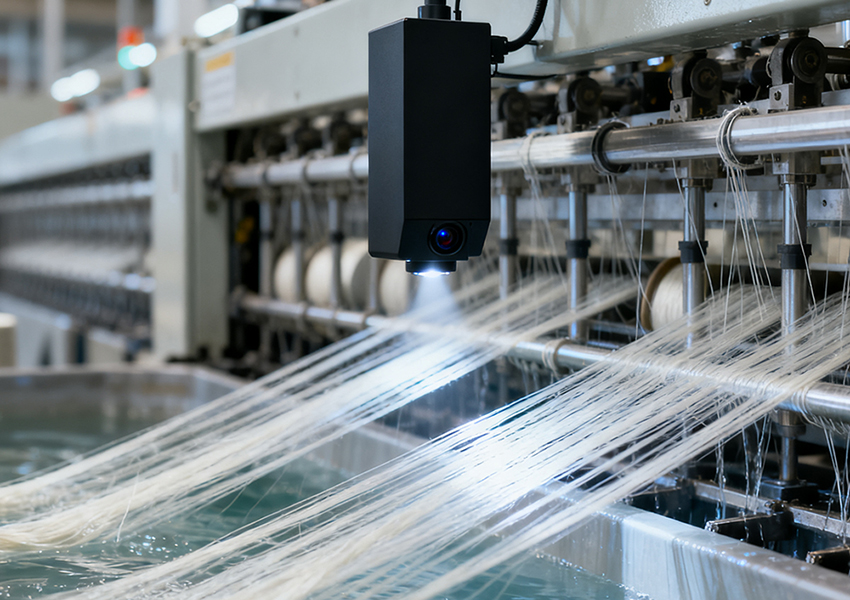
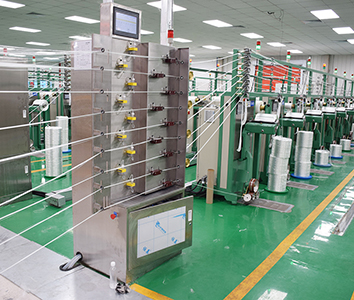
Bundling stage after raw filament drawing: Intelligent cameras capture the newly drawn multiple raw filaments at a high frame rate. The AI algorithm measures the diameter of each yarn in real time to judge whether it is within the process tolerance range, and identifies anomalies such as broken filaments and merged filaments simultaneously.
Drying stage after sizing agent coating: Cameras image the yarns passing through the sizing tank to detect whether the sizing coating is uniform, and identify local color differences or bulges caused by uneven coating thickness, so as to avoid yarn adhesion or degraded mechanical properties after drying.
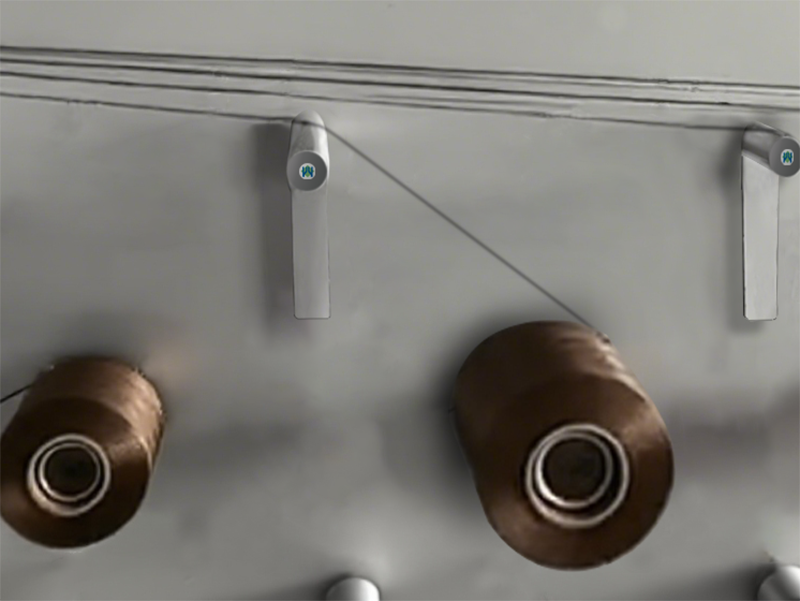
Winding stage: Cameras focus on the yarn path of the winding machine to monitor the position of yarns on the yarn guides and tensioners. Once yarn offset, slackness or fuzz clusters are detected, an immediate warning is triggered and the equipment is controlled to stop for adjustment, preventing yarn entanglement or breakage.
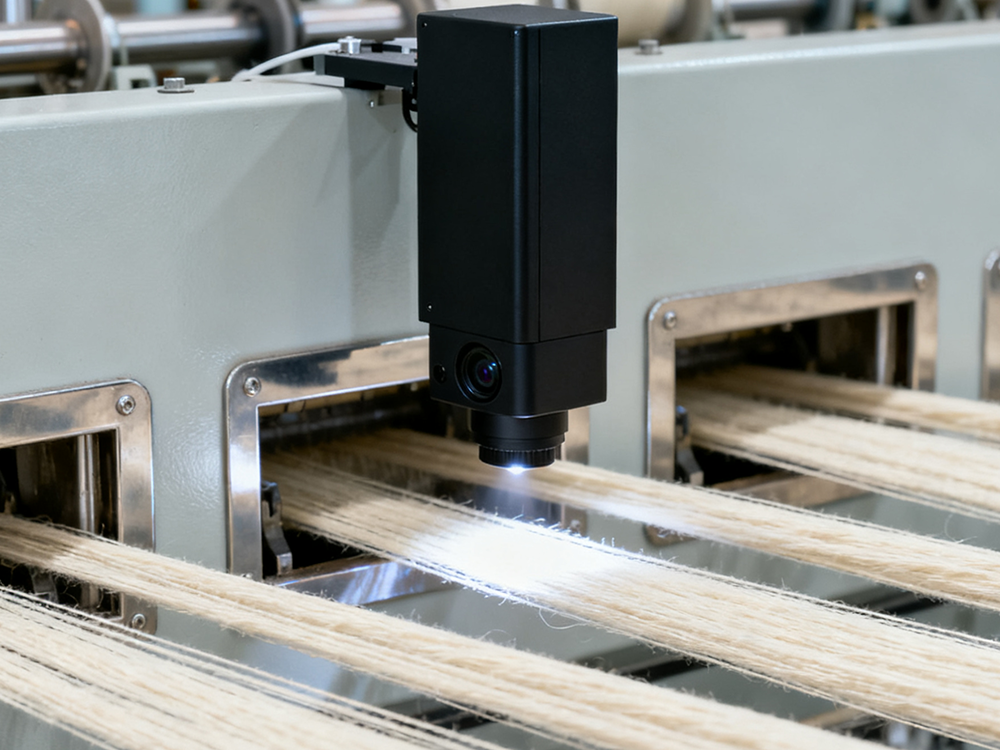
Real-time and accurate detection: The intelligent cameras can monitor up to 32 parallel yarns simultaneously, with a detection accuracy of ±0.01 mm and a missed detection rate of less than 0.1%, far exceeding the efficiency and reliability of manual inspection.
Defect root cause tracing: The system automatically records each frame of images and defect data. Combined with production line PLC data, it can quickly locate the equipment or process causes of defects, supporting production line optimization.
Production cost reduction: Early warnings reduce the generation of waste filaments and cut down manual inspection costs. According to actual customer calculations, the yarn production loss rate can be reduced by 8%–12%.
Data-driven decision-making: Long-term accumulated detection data can be used to analyze the occurrence patterns of yarn defects, providing data support for equipment maintenance and process parameter optimization, and improving the overall stability of the production line.
We pride ourselves on customer service and are committed to providing five-star support. If you have any questions about our products, please feel free to call or send an email to us.

Professional Integrator of Automated Liquid Handling System Equipment
Room 108, 1st Floor, Building 3, 666 Songhuang Road, Qingpu District, Shanghai
1st Floor, Building A, Chuangye Center No. 295 Jingxiu Street, Jingxiu District Baoding City, Hebei Province, China




 English
 简体中文
简体中文